By a Miami-based photo restoration artist with over 5 years of experience
If you live in Miami, you know the feeling. A hurricane warning goes out, you scramble to protect what you can, and when the storm passes, you assess the damage. For most people, the losses that hit hardest aren't the furniture or the appliances: it's the photo albums. The irreplaceable ones. The ones that sat in a closet for decades and survived everything, until now.
Miami's climate — the humidity, the tropical storms, the hurricane seasons — makes water damage one of the most common threats to family photos in South Florida. Flooding, moisture, and mold can destroy decades of memories in hours. But "destroyed" doesn't always mean gone forever.
As a full-time photo restoration professional based in Miami, I've worked with families across South Florida who thought their photos were beyond saving. Many of them weren't. Here's what you need to know about water-damaged photo restoration, and how to give your family's history the best chance of survival.
Why Miami Photos Are Especially Vulnerable
Humidity is the silent enemy of old photographs. In Miami, where humidity levels regularly exceed 80%, photos stored in closets, garages, or attics are already under constant stress, even before a storm arrives. Over time, moisture causes:
- Fading and color shifting, especially in photos from the 1960s–1980s
- Mold and mildew growth on the surface of the image
- Paper warping, rippling, and brittleness
- Emulsion lifting, where the actual image layer begins to separate from the paper
- Staining from floodwater, which often carries dirt, debris, and chemicals
When a hurricane brings flooding on top of all of that, the damage can be severe. But severe doesn't mean hopeless — and acting quickly makes an enormous difference.
Real Story: Three Albums Saved After Hurricane Milton
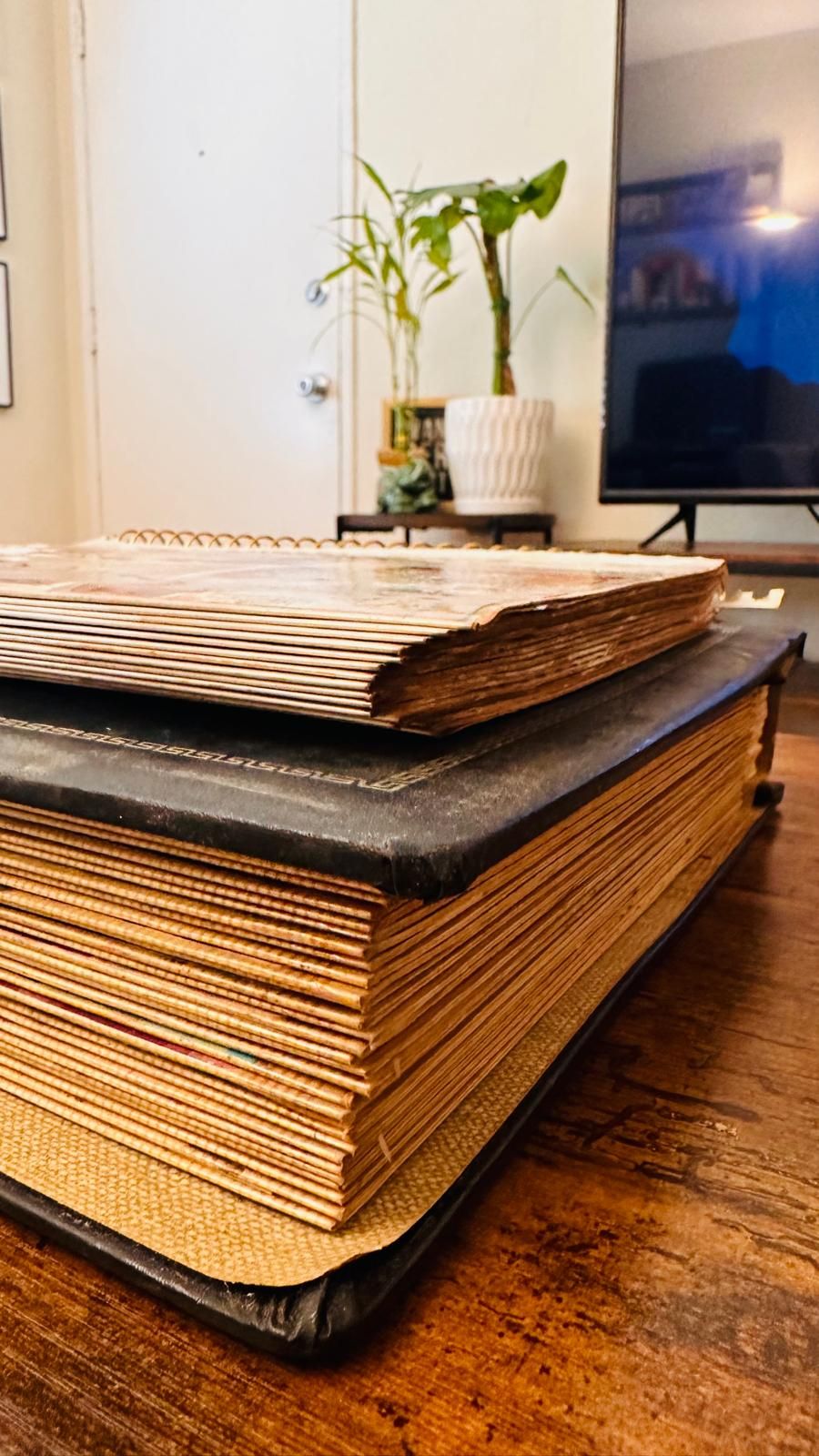
One of the most meaningful projects I've taken on came from a client who reached out after Hurricane Milton devastated her home. She had three or four family photo albums — photos spanning from the 1930s through the 1980s — that had suffered severe flood damage. Her message to me said it simply:
"I have 3 or 4 albums that were damaged in Hurricane Milton. I would love to be able to save them. I also have others that are old — I would like to preserve them, but they are in good condition. [These albums are] to save my family history."
The photos were heavily damaged — water stains, mold, fading, and physical deterioration across decades of family memories. It was a large, complex project. But it was also exactly the kind of work that reminds me why this profession matters.
Photo by photo, we worked through those albums. Images of family members from the 1930s, moments from the mid-century, portraits and gatherings from the 70s and 80s... all of it brought back as faithfully as possible to what it once was. Her family's history, rescued from the floodwater.
Real Story: A 50th Anniversary Gift, Restored in Time
Not every water-damaged photo comes from a storm. Sometimes, it's simply the slow damage of time and Miami's relentless humidity.
Last year, a family came to me with a beautiful but heartbreaking challenge: they wanted to display wedding photos at their parents' 50th anniversary party, but the original prints had suffered significant water damage. The colors had shifted, stains had set in, and the photos — which should have been centerpieces of the celebration — were in no condition to be displayed.
We restored the wedding photos in time for the party. The couple got to see their wedding day — crisp, clear, and full of color — displayed on the walls of their 50th anniversary celebration, surrounded by their children, grandchildren, and closest friends.
That's what water-damaged photo restoration in Miami can make possible. Not just a repaired image... a restored moment.
What to Do Immediately After Water Damage
If your photos have just been exposed to water or flooding, time is critical. Here's what to do before you even think about restoration:
1. Handle with extreme care
Wet photos are fragile. The emulsion — the layer that holds the image — is soft and can smear or tear easily. Pick them up by the edges and never stack wet photos face-to-face.
2. Rinse gently if needed
If the photos are covered in muddy floodwater, rinse them gently with clean, cool water. Do not rub. The goal is to remove debris without disturbing the image.
3. Air-dry face-up
Lay photos face-up on a clean surface or hang them with clips. Do not use heat to dry them — no hair dryers, no direct sunlight. In Miami's humidity, use a fan or air conditioning to help speed drying.
4. Photograph everything
Before you do anything else, photograph the damaged photos with your phone. This documents the original damage and gives a restoration professional a reference to work from.
5. Contact a professional as soon as possible
Mold can begin forming on wet photos within 24 to 48 hours — especially in Miami's climate. The sooner a professional can assess the damage, the more options you'll have.
What Can Actually Be Restored?
Every damaged photo is different, and the extent of restoration possible depends on the severity of the damage. Here's an honest breakdown of what professional restoration can address:
Water stains: One of the most common issues I see in Miami. In most cases, staining can be significantly reduced or eliminated through careful digital restoration.
Mold and humidity damage: Mold spots and the discoloration they leave behind can be removed in many cases, though heavily mold-damaged photos require more intensive work.
Fading and color shifts: South Florida's heat and humidity accelerate color fading. Professional restoration can bring back lost color and correct unnatural shifts.
Tears and physical damage: Flood damage often causes tearing or warping. These can be digitally repaired with hand-editing techniques.
Missing areas: In cases of severe damage where parts of the image are completely gone, a professional can reconstruct missing sections using context from the surrounding image.
The Restoration Process: What Happens to Your Photos
When you bring me a water-damaged photo, here's exactly what happens:
High-resolution scanning. Every photo is scanned at high resolution before any editing begins. This captures every detail the original still holds, and it means your physical original is handled as little as possible going forward.
Multi-tool digital restoration. I use Adobe Photoshop, Lightroom, Topaz AI, and other specialized tools — taking the best from each for different aspects of the restoration. No single tool does everything well, and professional restoration is about knowing which to trust for which task.
Hand editing, pixel by pixel. The most important step — and the one no app can replace. I edit by hand to ensure the result is as faithful as possible to the original: real faces, real textures, real moments.
A finished print delivered to you. Restoration starts at $150, which includes the scanning, the full restoration service, and a print up to 8×10 inches — ready to frame, display, or gift.
Miami's Storms Don't Have to Take Your Memories
Living in Miami means accepting that storms are part of life. But losing your family's photo history doesn't have to be. Whether your photos were damaged by Hurricane Milton, an old roof leak, or decades of South Florida humidity, there is often more that can be saved than you think.
I treat every photo as if it were from my own family... with the respect, care, and patience that irreplaceable memories deserve. The goal is always the same: a result that looks like the photo was taken yesterday.
Let's See What We Can Save
If you have water-damaged photos from a storm, a flood, or years of Miami humidity, I'd love to take a look. Send me your photo and tell me a little about it — where it's from, who's in it, what happened to it. Every photo has a story, and I'm here to help you keep yours.
📧 Send your photo to: contact@odettephotoart.com
I personally read every message and respond to every inquiry. No obligation — just an honest conversation about what's possible for your photos.


